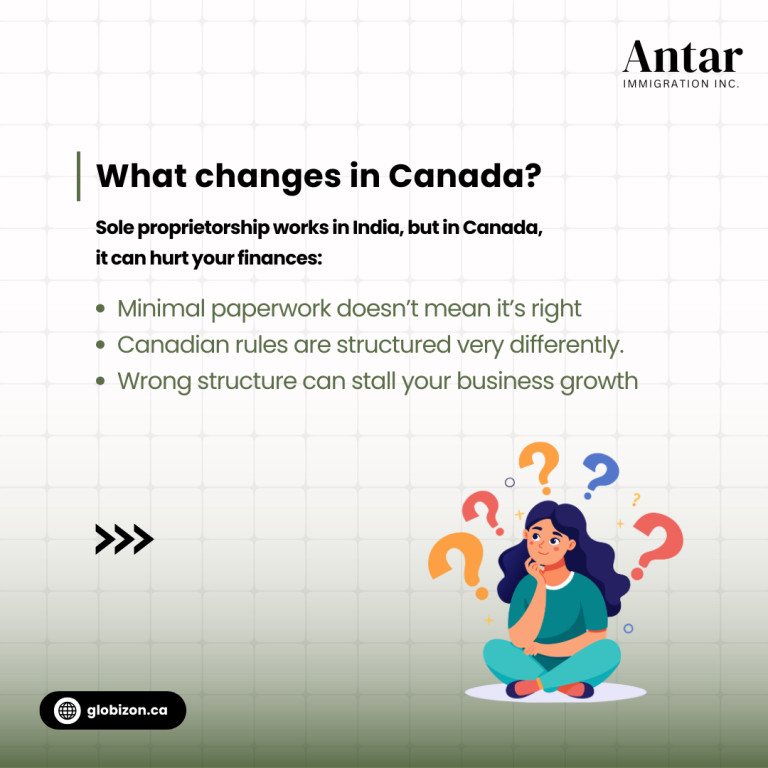
For many Indian entrepreneurs moving to Canada, starting a business feels like a natural next step. But often, they bring along a familiar structure—sole proprietorship. While this model may work well in India due to low compliance and minimal paperwork, in Canada, it is far from ideal. If you’re considering launching a business here, it’s critical to understand why sole proprietorship can limit your growth and put your personal finances at risk.
Why sole proprietorship doesn’t work in Canada?
In India, sole proprietorship is simple. You can operate informally, with minimal tax burden and fewer legal concerns. But in Canada, things are different. As a sole proprietor, you’re personally liable for every financial and legal risk your business takes on. That means if your business fails or runs into legal trouble, your personal assets are also at stake.
Additionally, the Canadian tax system is built to reward incorporated businesses. Sole proprietors miss out on a wide range of deductions. For instance, business-related rent, lease expenses, utilities, or even partial home expenses cannot be written off in the same way as they can under an incorporated setup. This results in higher tax outflow and less financial efficiency.
Why does incorporation give you the edge?
When you incorporate your business in Canada, you separate your personal identity from the business. This shields your personal assets and gives you access to significant tax planning advantages. You can deduct lease expenses, write off business use of your home, and claim a number of operational costs. This structure not only lowers your tax liability, it also increases your business credibility.
Clients, financial institutions, and immigration officers treat incorporated businesses with more seriousness. Even if you’re a one-person team, having a formal business setup signals professionalism and long-term vision.
The immigration advantage of the right business structure
For Indian entrepreneurs using immigration programs like LMIA or Startup Visa, incorporation is not optional—it’s essential. Immigration authorities assess your business’s legitimacy when processing applications. An incorporated entity shows formal investment, a serious growth plan, and readiness to comply with Canadian regulations.
Starting with the wrong structure can weaken your case. Starting with the right one can open doors faster.
Conclusion
In Canada, entrepreneurship thrives on structure, compliance, and strategy. Sole proprietorships, while convenient in India, don’t offer the protection, tax advantages, or immigration strength needed to succeed here. Incorporation, on the other hand, sets a solid foundation from Day 1.
At Antar Immigration, we specialise in helping Indian entrepreneurs transition seamlessly into the Canadian business ecosystem. From selecting the right structure to helping with legal registration and compliance, we guide you step by step.
Frequently asked questions
Q1: Can I legally operate as a sole proprietor in Canada?
Yes, it is legal. But it puts your personal assets at risk and limits business benefits.
Q2: Is incorporation only for large businesses?
Not at all. Even solopreneurs benefit from incorporation in terms of tax savings and credibility.
Q3: What kind of expenses can I write off if I incorporate?
You can write off lease, business-use utilities, home-office expenses, and many operational costs.
Q4: Does incorporation impact my immigration process?
Yes. An incorporated company strengthens your LMIA or business visa application by signalling commitment.
Q5: Is it costly or complicated to incorporate?
It’s a straightforward process. And the long-term benefits far outweigh the initial setup cost.